Translate

Showing posts with label History. Show all posts

Sunday, April 5, 2015

October 1887: French Indochina and Vietnam's Amazing Literacy Rates

Look at these crazy stats! These are for youngsters;
they taper off a few percentage
points as age increases.
In October of 1887, France formally founded French Indochina, and with it solidified a path which would result in modern Vietnamese rates that are through the roof.

(beat)

Wait, really?

Yes! But let's give credit where it's due: this story spans much more, from French Jesuit missionaries to a 8,000 word trilingual dictionary to a very recent (historically speaking) adoption of the entire written Vietnamese language.

Today's script is called Quoc Ngu, or "National Language," and is the national script of Vietnam. It's most interesting characteristic, beyond the tones inherited from it's Chinese history, are that it is in Roman characters and is pronounced phonetically! This makes it different in appearance from most other SE Asian languages, which generally looks like beautiful scribbling.

However, below the makeover it got in the 17th and 19th centuries, the grammar remains very similar to others in the regional language family (and the grammar is so easy it's almost comical, which probably also helps literacy).

In addition, literacy rates in Modern Vietnam are high. Like, really high. Per UNICEF's most recent data (2013), total adult literacy rate, 2008-2012, lies at a cool 93.4%. For youth it climbs even higher - 96.7% of Vietnamese females 18-25 are literate, and the males figure rests at 97.5%. These are STUNNING figures, and, if accurate (I'm not sure if that data was collected in-house by UNICEF or outsourced), are a serious achievement. We'll learn more about how these great literacy rates run up against the State Party and their media restrictions much later in this series, so keep these in the back of your mind.

To put this in perspective, America has an ongoing literacy crisis (as does much of the world, developed or no). 14% of American adults can't read. A ridiculous 19% of high school graduates cannot read. What. the. f*ck. (Yes, the problem is definitely unions, and not the fact that poverty shrinks your brain from birth. *eyeroll*) These numbers are from a US Department of Education paper published in 2013. If that doesn't break your brain, I don't know what will.

Ok, but backing away from the politics and back to the French (if I had a nickel)...

Monday, March 30, 2015

Saigon Sights: The Reunification Palace


The Reunification Palace is one of the most historically and architecturally interesting sights in HCMC, and it shows. It might not offer a lot of spectacle for the casual tourist, but inside it remains a perfectly preserved piece of mid-century Modern Vietnamese, from the open air party solon up top to the bunkers buried below, and it's stunning.


This beautifully modern building, unique in Vietnam, saw every historic event that occurred in South Vietnam from the date of the Geneva accord and the withdrawal of the French to the moment that Liberation forces crashed through the front iron gate on April 30, 1975, terminating the regime.

Let's take a tour through time and space!


This is the state banqueting hall. Banquets with up to 100 guests were held in this room. One of the most notable was the inauguration dinner of President Nguyen Van Thieu and his VP on October 31, 1967. The rooms gold color scheme was intended to create a convivial atmosphere.

Tuesday, March 24, 2015

192 A.D.: The Chams in the Land Before Vietnam

In my last post we heard a bedtime story about the origins of the Vietnamese people (TL;DR: Viets are spawn of a fairy and a dragon, who then got an amicable divorce and each took half the kids back to their parents' homes). This occurred in one of the earliest Vietnamese kingdoms, Dai Viet, which covered the area of current North Vietnam/South China.

Fast forward about 1,500 years and we encounter the Sa Huynh peoples, the forebears of the more culturally developed Chams. Scholars believe they were Malayo-Polynesian-speaking seafarers from Borneo, and this tendency to dominate the seas never completely left them as they founded what would become one of the regions' powerhouse governments, complete with major religions and early ideas of statecraft imported from the Indians. It was initially centered on the modern central Vietnam coast around Da Nang, although the sea unquestionably was their true dominion.

The Sa Huynh thrived and expanded from roughly 1,000 B.C. to the 2nd Century A.D., which is when we find the Cham peoples' distinctive culture flowering. Cham artifacts and ruins have been found on most of the western islands of the South China Sea (at that time known as the Cham Sea, because they know who's in charge), including the Sprately and Paracel islands, which we'll learn a bit more about much, much later in this series.

This is a very unique Champa sculpture that represents the nine gods (navagraha) associating planets to other deities, and was once worshipped. It's linked strongly to the Indian traditions of cosmology, and very common in India. Similar remnants have been found among the ancient Cambodian Khmer art. Taken at the HCMC History Museum of Vietnam.
Hinduism was imported early on in the kingdom's history from Indian merchants, and was followed later by Islam. Adherents of both religions also revered Cham kings and deities, as well as their ancestors, much like virtually all current-day Kinh (ethnic Vietnamese) do.

Sunday, December 7, 2014

General Observations on Saigonese Architecture


[NOTE: This post goes out to my friend Jenny, who asked me about architecture in July 2013. Excitingly, it's a much more interesting topic than I assumed! So here's the first post!]

I find myself often looking down out my window, which is located on the 3rd (4th, American-style counting) floor of my house, and find myself succumbing to the question that must be difficult for any Vietnamese architect to resist: why isn't the entire lot filled... the entire vertical distance??

There's about half a meter of a small awning over the entrance to the garage... that would give me (or my poor roomies on the other side of the building, in their small, glass closet-rooms) just a liiiiiitle bit more breathing room.

But this is a form of thinking that I had never encountered as a designer. Form really SHOULD follow function, but it's difficult to resist the idea that an object's aesthetic should be at least equally important.

On one level, though, this extreme interpretation of Form v. Function just makes common sense - people are more important than the building, so stretch the building to the farthest corners of the available land, all the way up, and you'll have slightly more comfortable humans.

Not to mention the fact that in the average Vietnamese home, there are many family members, and, all of a sudden, this doesn't just seem like A way to do it, it becomes THE way to do it. Even in parcels of city land that are surrounded by unsold/unimproved lots, the tube house reigns supreme... because the expectation is that this neighborhood will, in time, be just like every other well-developed neighborhood in the city - packed, walkable, vital, and very, very local.

Sunday, August 17, 2014

Pho Binh: Occupation Out Front, Tet Offensive Upstairs

Terkel has his eyes closed in every picture, I swear.
The pho bo was satisfactory, but not mind-expanding
 (...maybe I ask too much from my soup).
A pho restaurant named 'Peace Soup' that held the command of a massive military operation? How much more Vietnamese can you get?! Probably not much. If it were a perfume it would be called Essence d'Viet.

I may be in the minority in this, but I didn't get a whole lot of education concerning America's actions in Vietnam in my public school education. I feel shortchanged, and a bit stupid about it.

Soup's on - It's Learnin' Time!

The entire back half of the 20th century was a blur in history classes (as it was also, now that I think of it, in my Theatre History/Literature class), and although names and events stir a vague recollection in our collective unconscious for me, I'm embarrassed to reveal exactly how much I don't know about the Vietnam conflict... AKA The American War.

Embarrassed because I live here now, and doubly embarrassed because the trauma of this prolonged, ridiculous war game has had long-lasting effects and left obvious scars (albeit, scars fading into the past) on many of America's politicians and demagogues in the years since.

Visitors from all over the world have left notes expressing
peace and well-wishes for the family operators of Pho Binh.
Every time the hawkish white men push to go to war, there are fewer and fewer people to remind us of our mistakes in Vietnam (more recently Iraq, which is sadly now becoming a new problem), which is a pity.

The world needs more friends, and fewer enemies. This is the current attitude of the Vietnamese government (except maybe about China) and certainly of Pho Binh (Peace Soup), and has been since the Tet Offensive was planned above the kitchen of this restaurant beginning in October of 1967.

The family is always ready to offer soup and history lessons - they embrace the significance that their establishment holds - and they have been drawing in curious members of the public for over 44 years since the Fall of Saigon in 1975.

My mission to understand more about this prolonged and divisive conflict continued in the most delicious and interesting way possible... with food and some first-hand history.

Wednesday, August 13, 2014

Hội An: Ancient Town, Lovely Beach, Magic Atmosphere


Beaches, textiles, cacti, seafood, and old, old, old buildings are just a few of the pieces of the puzzle called Hội An - one of the oldest, and most immaculately preserved, trading port towns existing in SE Asia today... and definitely one of the most unique.

In July 2014 I visited with my good friend Lisa, after spending several (extremely mild) days in beautiful Da Lat and a bit in Saigon. It was only 700 km from the south-central highlands to this central port town, but the weather couldn't have been more different! We got a lot of variation on our trip together - a key characteristic of Vietnam.

Da Lat required me to buy a sweatshirt and scarf (a scarf, people), but there was zero need for them here. Although it was the beginning of the rainy season, we were blessed with three days of beautiful, hot, sunny days, and we took advantage of each one to the fullest, eating, drinking, biking, and walking our way around this sleepy and beautiful town.

Tuesday, July 29, 2014

Hạ Long Bay: Natural and Economic Marvel of North Vietnam

'Tornado Light' - all afternoon!
"Twisters!" is an unexpected thing to hear where I live - not just because I immediately wonder what Helen Hunt is doing these days, but because I don't read much weather news here in Vietnam (why bother... it's either Hot and Dry or Hot and Rainy).

So when my mom and I did hear it, it only lent another interesting layer to our overnight daytrip to Hạ Long Bay, Vietnam, one of the new Seven Wonders of the World, in June 2014.


This is an ancient place, one of the first cradles of humanity in the Vietnam region, and a huge, interesting business built on the fickle whims of Mother Nature. Read on...

Monday, July 21, 2014

Côn Đảo: Unspoiled Vietnamese Island Life


Hey, you. You in the office. You seem stressed.

What do you want?

You want peace and quiet? You want dogs? You want the best diving in Vietnam and fresh seafood for every meal?

Done.

Beaches? I know a nice one. Endangered animals? Scads (well, maybe not scads... they are endangered, after all) Ghosts? If you believe some Vietnamese, this place is crazier than NYC at the end of Ghostbusters 2.

And history? Here's a place that summarizes in one 200 year period all the struggles and trials that Vietnamese mainlanders have gone through over thousands of years - shorter, sure, but arguably bloodier, and events just as traumatic to the national psyche in their sheer brutality and lingering impact.

You want all these things, plus boat rides, hiking, bike rides, and island-wide radio hour twice a day?

Have I got the place for you!

Saturday, October 19, 2013

Freedom of Religion in Vietnam

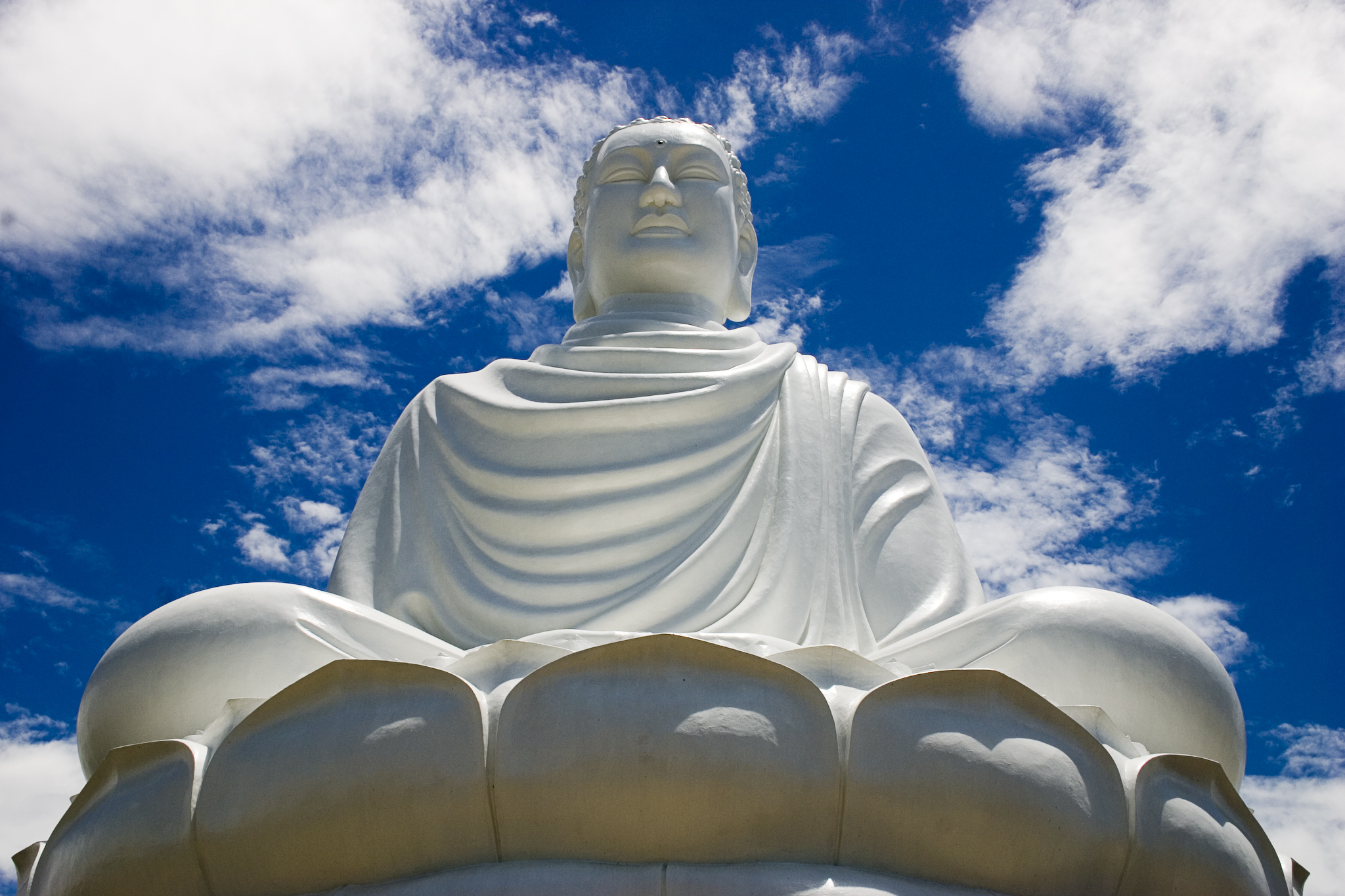
The Buddha statue in Nha Trang
Growing up as a pastor's son, I've always found religion and its effects to be interesting and worthy of attention, and its role in SE Asia, and Vietnam in particular, is much different compared to how Americans generally regard the practicing of religious principles. In Vietnam it plays a huge role in shaping public attitudes and culture - officially invisible but publicly obvious - and I found myself becoming more interested in the complex dance between the laws of the State and their support, or lack thereof, for various religious groups. This post is an attempt to explore and dissect these relationships and religions in a very perfunctory manner. I do not profess to be an expert, but as an interested observer, this is what I've discovered.

Religion in Vietnam has a long and complicated past that is directly tied to its culture and history. While the country, following in the footsteps of other states established with Marxist-Leninist ideologies, remains officially and almost militantly atheistic, signs of believers are littered everywhere, and there are at least three major religions with a significant amount of adherents, as well as several smaller groupings.

Wednesday, September 25, 2013

Park Life: Công Viên 23 Tháng 9

The lily pond in Công Viên 23 Tháng 9, surrounded by an isolating and deeply relaxing grove of palm trees.


Today I want to take you on a tour of the park where I meet several of my clients, as well as my own personal Vietnamese tutor. On concrete benches beneath the shade of palm trees, in a section far away from the mosquitos that live in the pond, I learn and teach languages. Coupled with a ca phe da (iced coffee), banh mi, and folders full of language notes, my students and I learn languages together in the morning heat.

Leslie Knope would be proud! This repurposed park is today a thriving civic hub, one that I visit at least three times a week.