Translate

Showing posts with label Architecture. Show all posts

Saturday, August 1, 2020

Things to Do and Eat in My Tho, Vietnam


My Tho is just a short distance from HCMC (less than 40 miles) but it feels like another world. It takes the bus - Hung Hieu from District 5 - about 1.5-2 hours to make the trip (mostly because of the traffic, but also because they make several stops along the way). Fortunately, once you get there, there's enough to make for a relaxing but eventful weekend out of the city.


There's enough here to make for a pretty neat trip, including snakes, temples, statues, food, and plenty of pretty countryside on relatively nice roads - rent a motorbike and get exploring!

Follow me for some highlights...

Monday, May 29, 2017

Book Review: 'The Green Metropolis' and HCMC


David Owen’s amazingly prescient and clear-eyed book from 2009, The Green Metropolis, deconstructs exactly what city planners, environmentalists, and the general population get right about cities… and what they get very, very wrong.

His book offers staggeringly simple reasons to rethink how we approach the twin questions of:

  1. “Are cities good or bad for the environment?” and
  2. “Cars… OMG?”
His answers boil down to:

  1. Very, very, very good, and
  2. Yes, cars, OMG.

His arguments, citing a veritable mountain of statistical evidence laid bare in his clear, concise writing, chronicles the rise, fall, rebirth, and future of human cities since the invention of the automobile. He argues that these high-density urban environments are not only more environmentally green, but actually shift the entire conversation from cars and drivers back to fundamental quality-of-life issues for all humans, from the very young to the elderly, and how best to satisfy them.

Owens’ three basic themes are clear: live smaller, live closer, and drive less.

Monday, March 30, 2015

Saigon Sights: The Reunification Palace


The Reunification Palace is one of the most historically and architecturally interesting sights in HCMC, and it shows. It might not offer a lot of spectacle for the casual tourist, but inside it remains a perfectly preserved piece of mid-century Modern Vietnamese, from the open air party solon up top to the bunkers buried below, and it's stunning.


This beautifully modern building, unique in Vietnam, saw every historic event that occurred in South Vietnam from the date of the Geneva accord and the withdrawal of the French to the moment that Liberation forces crashed through the front iron gate on April 30, 1975, terminating the regime.

Let's take a tour through time and space!


This is the state banqueting hall. Banquets with up to 100 guests were held in this room. One of the most notable was the inauguration dinner of President Nguyen Van Thieu and his VP on October 31, 1967. The rooms gold color scheme was intended to create a convivial atmosphere.

Tuesday, March 24, 2015

192 A.D.: The Chams in the Land Before Vietnam

In my last post we heard a bedtime story about the origins of the Vietnamese people (TL;DR: Viets are spawn of a fairy and a dragon, who then got an amicable divorce and each took half the kids back to their parents' homes). This occurred in one of the earliest Vietnamese kingdoms, Dai Viet, which covered the area of current North Vietnam/South China.

Fast forward about 1,500 years and we encounter the Sa Huynh peoples, the forebears of the more culturally developed Chams. Scholars believe they were Malayo-Polynesian-speaking seafarers from Borneo, and this tendency to dominate the seas never completely left them as they founded what would become one of the regions' powerhouse governments, complete with major religions and early ideas of statecraft imported from the Indians. It was initially centered on the modern central Vietnam coast around Da Nang, although the sea unquestionably was their true dominion.

The Sa Huynh thrived and expanded from roughly 1,000 B.C. to the 2nd Century A.D., which is when we find the Cham peoples' distinctive culture flowering. Cham artifacts and ruins have been found on most of the western islands of the South China Sea (at that time known as the Cham Sea, because they know who's in charge), including the Sprately and Paracel islands, which we'll learn a bit more about much, much later in this series.

This is a very unique Champa sculpture that represents the nine gods (navagraha) associating planets to other deities, and was once worshipped. It's linked strongly to the Indian traditions of cosmology, and very common in India. Similar remnants have been found among the ancient Cambodian Khmer art. Taken at the HCMC History Museum of Vietnam.
Hinduism was imported early on in the kingdom's history from Indian merchants, and was followed later by Islam. Adherents of both religions also revered Cham kings and deities, as well as their ancestors, much like virtually all current-day Kinh (ethnic Vietnamese) do.

Sunday, March 15, 2015

Saigon Sights: The FITO Museum of Traditional Vietnamese Medicine

A re-creation of an apothecary's cupboard, above the stairs.
One of the last days of my roommate Elena's time in Vietnam (as a medical intern), she wanted to visit the FITO Museum of Traditional Vietnamese Medicine, and Antoine and I readily agreed. You can't really visit the HCMC Tripadvisor.com site without noting that this museum is almost always the first or second-rated attraction in the city, and yet I'd never been... even though it's a mere 1 km from my house.

Now, this sounds like it might be a fairly dry subject, but wow. Not only is the museum absolutely captivating, but it's beautiful and informative as well. Those reviews online have it right! It may be a small side trip out of the main D1 area, but it's completely worth it.

Click through for a small photo tour, for those of you who may not be able to see it in person, and feast your eyes!

Sunday, December 7, 2014

General Observations on Saigonese Architecture


[NOTE: This post goes out to my friend Jenny, who asked me about architecture in July 2013. Excitingly, it's a much more interesting topic than I assumed! So here's the first post!]

I find myself often looking down out my window, which is located on the 3rd (4th, American-style counting) floor of my house, and find myself succumbing to the question that must be difficult for any Vietnamese architect to resist: why isn't the entire lot filled... the entire vertical distance??

There's about half a meter of a small awning over the entrance to the garage... that would give me (or my poor roomies on the other side of the building, in their small, glass closet-rooms) just a liiiiiitle bit more breathing room.

But this is a form of thinking that I had never encountered as a designer. Form really SHOULD follow function, but it's difficult to resist the idea that an object's aesthetic should be at least equally important.

On one level, though, this extreme interpretation of Form v. Function just makes common sense - people are more important than the building, so stretch the building to the farthest corners of the available land, all the way up, and you'll have slightly more comfortable humans.

Not to mention the fact that in the average Vietnamese home, there are many family members, and, all of a sudden, this doesn't just seem like A way to do it, it becomes THE way to do it. Even in parcels of city land that are surrounded by unsold/unimproved lots, the tube house reigns supreme... because the expectation is that this neighborhood will, in time, be just like every other well-developed neighborhood in the city - packed, walkable, vital, and very, very local.

Tuesday, September 9, 2014

Da Lat's Hằng Nga Guesthouse

Lisa's Butt in her New Pants approaching the second spire of Crazy House by cement ivy walkway.
It makes sense... trust me.
Note: This summer took me to many new places... so many, in fact, that I'm only just now realizing that I have a zillion more posts to write about those three short months! Oof.

In July I went to Da Lat (again) with my friends Erin and Lisa. We had a BLAST.

Part of the experience was that we were staying in what I can easily call the most unique guesthouse I've ever seen. It's so absurd, I have a hard time even describing it with words. Even my gift for analogy seems like too fine a point on it when trying to talk about this astounding creative vision.

On second thought, that won't stop me from trying. Click through for a tour of one architect's vision made concrete (literally and figuratively, I assure you) - a kaleidoscope of nature, wire, stone, and wood brought together in an unforgettably eccentric manner.

Wednesday, August 13, 2014

Há»™i An: Ancient Town, Lovely Beach, Magic Atmosphere


Beaches, textiles, cacti, seafood, and old, old, old buildings are just a few of the pieces of the puzzle called Há»™i An - one of the oldest, and most immaculately preserved, trading port towns existing in SE Asia today... and definitely one of the most unique.

In July 2014 I visited with my good friend Lisa, after spending several (extremely mild) days in beautiful Da Lat and a bit in Saigon. It was only 700 km from the south-central highlands to this central port town, but the weather couldn't have been more different! We got a lot of variation on our trip together - a key characteristic of Vietnam.

Da Lat required me to buy a sweatshirt and scarf (a scarf, people), but there was zero need for them here. Although it was the beginning of the rainy season, we were blessed with three days of beautiful, hot, sunny days, and we took advantage of each one to the fullest, eating, drinking, biking, and walking our way around this sleepy and beautiful town.

Tuesday, February 25, 2014

Cambodia: There and Back Again

Ah, Cambodge! What can I say about you that hasn't been said a thousand times before?! Well, maybe a few words. If you insist, Internet, if you insist.

I will never get tired of taking pictures of palm trees. NEVER.
I absolutely loved my Tet vacation to Vietnam's southwestern neighbor, the Kingdom of Cambodia. This was my first time just goin' to another country, checkin' it out, you know. This entailed all sorts of new things like border crossings and currency exchange.


I mean, look how close I am to Cambodia! I'm practically there already, might as well go see what's what, right?

I've got a ton of photos, so consider these next few entries in the blog my finally getting down on paper the memories, moments, sights, musings, and observations that I made over the course of 8 days in early 2014.

One more thing - I wanted to add some more history into these, but virtually everything I learned was after I visited. To give you a sense of me when I took these pictures, I'll keep the historical commentary short and relevant, and try and let my pictures speak for themselves.

So dim the lights, make yourself some rice dish or whatever you're into right now, and click through...

Saturday, January 4, 2014

Saigon Sights: The Saigon Zoo and Botanical Gardens

Recently, I visited a place I told myself I'd never go again. On my previous excursion, it was the most depressing zoo outside of Minnesota (looking at you, Little Falls, MN): the Saigon Zoo and Botanical Gardens. And here I was again, ready for round two.

We weren't even supposed to be there!

But, alas, the History Museum was on naptime lockdown (sigh. I feel I'll never get used to that) for an hour and a half, and, with no where else to go, my friend Kasia and I ventured into the zoo next door to take some pictures, stroll around, and generally be snarky and judge-y about the whole thing. We'd both been there before, and, unlike her, I wanted to return to capture the sad on my upgraded camera. We were both afraid of being bummed out, but with nothing else to do, we reluctantly drifted in.

What a shock we had. Merely four months ago, this place was a decrepit wonderland of depression. Animals were skinnier and more despondent, attendance was lower, and it felt kind of run down. This time, admission prices had doubled (from a scant 6000 VND to a slightly less scant 12000 VND, or about .60 cents USD), the grounds had been given a makeover, several new habitats were under construction, and there were people! People everywhere! The most exciting animal in the park!

Continue on to see a few of my favorite pictures and my suggestion for a plan...

Tuesday, November 12, 2013

Saigon's Canals: The Project From Hell

The revamped main canal.

Ho Chi Minh City's canals are two different stories, which diverge significantly (ha), with many accidental but important lessons learned along the way. Today I want to tell you about what surely must be one of the most compelling sustainable infrastructure projects I've heard of yet: the transformation of the Nhieu Loc-Thi Nghe branch of the Saigon canal system.

Over the course of 10 years this branch was transformed from an open sewer spreading disease and destruction to a jewel of central Ho Chi Minh City's park system.

And, to think, it almost didn't happen - at least 4 times. In fact, it was literally abandoned as un-doable at one point by a foreign contractor. Not a good omen, you say?


Hit the jump for just how the longest of these canals turned out, as well as pictures from some of the city's less well-off canals:

Saturday, October 19, 2013

Freedom of Religion in Vietnam

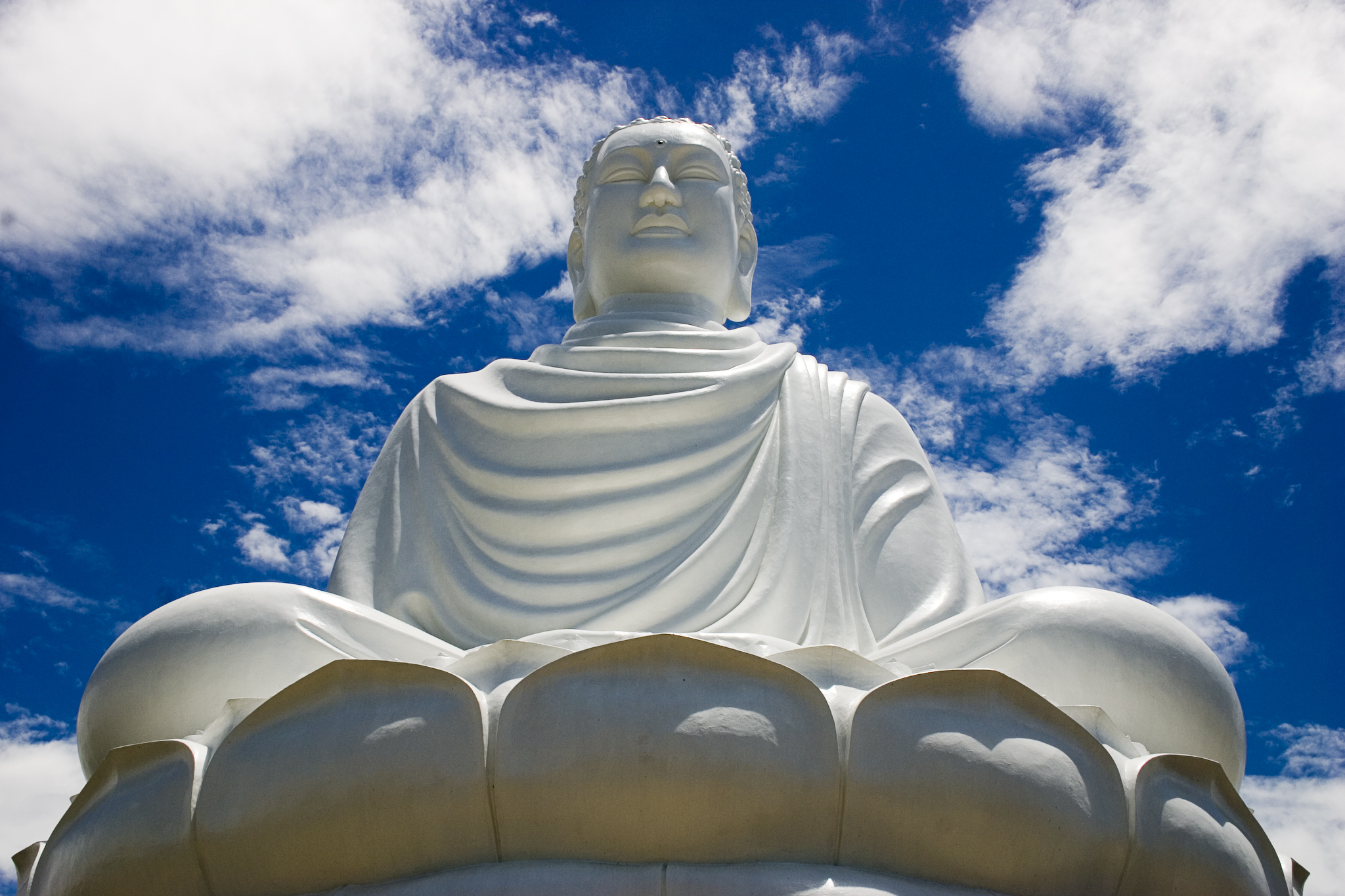
The Buddha statue in Nha Trang
Growing up as a pastor's son, I've always found religion and its effects to be interesting and worthy of attention, and its role in SE Asia, and Vietnam in particular, is much different compared to how Americans generally regard the practicing of religious principles. In Vietnam it plays a huge role in shaping public attitudes and culture - officially invisible but publicly obvious - and I found myself becoming more interested in the complex dance between the laws of the State and their support, or lack thereof, for various religious groups. This post is an attempt to explore and dissect these relationships and religions in a very perfunctory manner. I do not profess to be an expert, but as an interested observer, this is what I've discovered.

Religion in Vietnam has a long and complicated past that is directly tied to its culture and history. While the country, following in the footsteps of other states established with Marxist-Leninist ideologies, remains officially and almost militantly atheistic, signs of believers are littered everywhere, and there are at least three major religions with a significant amount of adherents, as well as several smaller groupings.

Wednesday, September 18, 2013

Wednesday, August 21, 2013

Saigon Sights: Notre Dame Cathedral


[Note: While I'm processing my first week teaching in HCMC's public primary schools, please enjoy some pictures of a fancy church!]

In separate occasions in June and July I took the time to stop by the Notre Dame Cathedral and take a few pictures of this beauty, which lies in the heart of downtown Ho Chi Minh City, not far from my favorite cafe (where I'm writing this) and the Resurrection Palace. Unfortunately they were both on Sundays, but here's a few photos of it. Enjoy!